01
Sneaker maniac
PROBLEM STATEMENT
Sneaker enthusiasts often face challenges in finding authentic, limited-edition sneakers across multiple platforms, leading to inconsistent shopping experiences and uncertainty about product originality. The lack of a centralized, user-friendly platform makes it difficult for users to explore, compare, and purchase sneakers confidently and conveniently.
MAIN GOAL
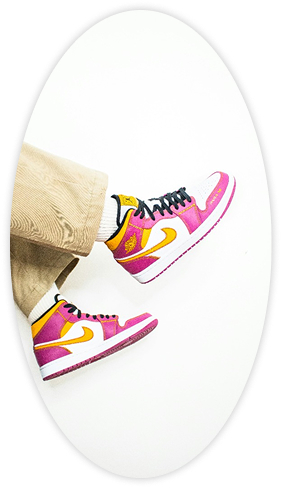
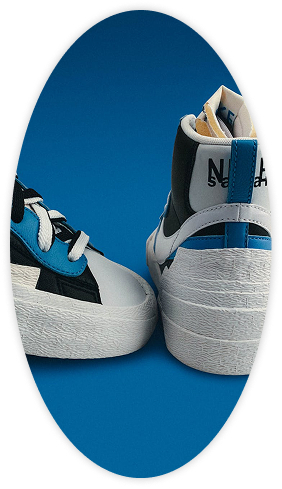
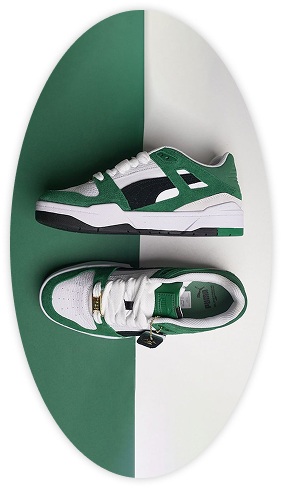
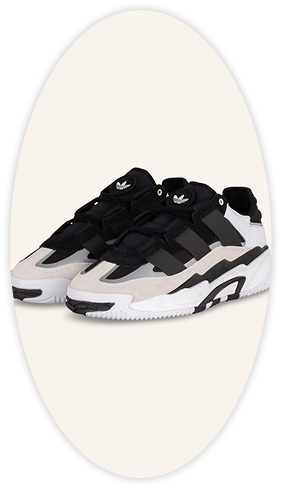
Step into the world of sneakers with Sneakers Maniac, the go-to app for every sneaker enthusiast. Whether you're a seasoned collector or a casual fan, Sneakers Maniac is designed to elevate your sneaker game and keep you on top of the latest trends. With Sneakers Maniac you can browse, select, and purchase your favorite footwear from the comfort of your home.
Design Thinking Process
Summary Of Research
Insights Gain: Through various research methods including user interviews and usability testing, valuable insights into user behavior, preferences, and pain points were gathered.
Identified Opportunities: The research identified key areas for improvement such as streamlining the checkout process, enhancing search functionality, and optimizing mobile responsiveness.
User-Centric Solutions: Recommendations were formulated with a focus on enhancing the overall user experience, prioritizing features and changes that directly address user needs and pain points.
Impactful Changes: Proposed solutions, when implemented, have the potential to significantly improve user satisfaction, increase conversion rates, and foster long-term user engagement.
Style Guide
Color - Shades Of Azure
It convey a sense of
energy and positivity
#018ABE
#393535
Logo Typeface
P
Playfair Display
preloved
Raleway
typography-
Urbanist
"Urbanist Typeface:
Empowering City Vibes,
Capturing Modern Energy."
Aa
Bold
Aa
SemiBold
Aa
Medium
Aa
Regular
Icons
02
Artstrictly
ArtStrictly
Project Overview
The primary problem addressed is the dilution and fragmentation of quality art engagement across general social media platforms. These sites fail to provide robust tools, proper attribution, and a focused community needed by serious artists and enthusiasts, leading to content being overlooked and genuine artistic discourse being buried by viral trends and non-art content.
Solution Given
ArtStrictly is a user-centered design project for a dedicated social media platform, solving the problem of diluted art content and superficial engagement on general sites. The final solution focuses on high-quality display, specialized discovery tools, and constructive critique to foster a professional and focused community for artists and enthusiasts.
Storyboards
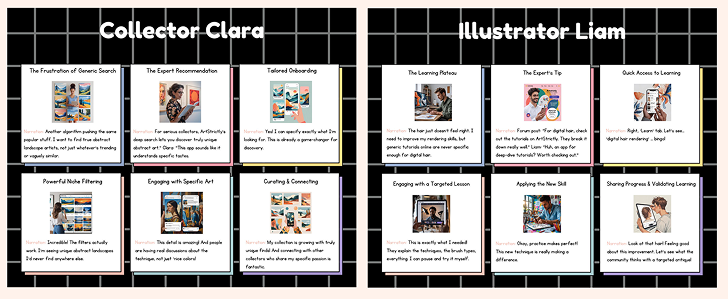
Discovery & Research
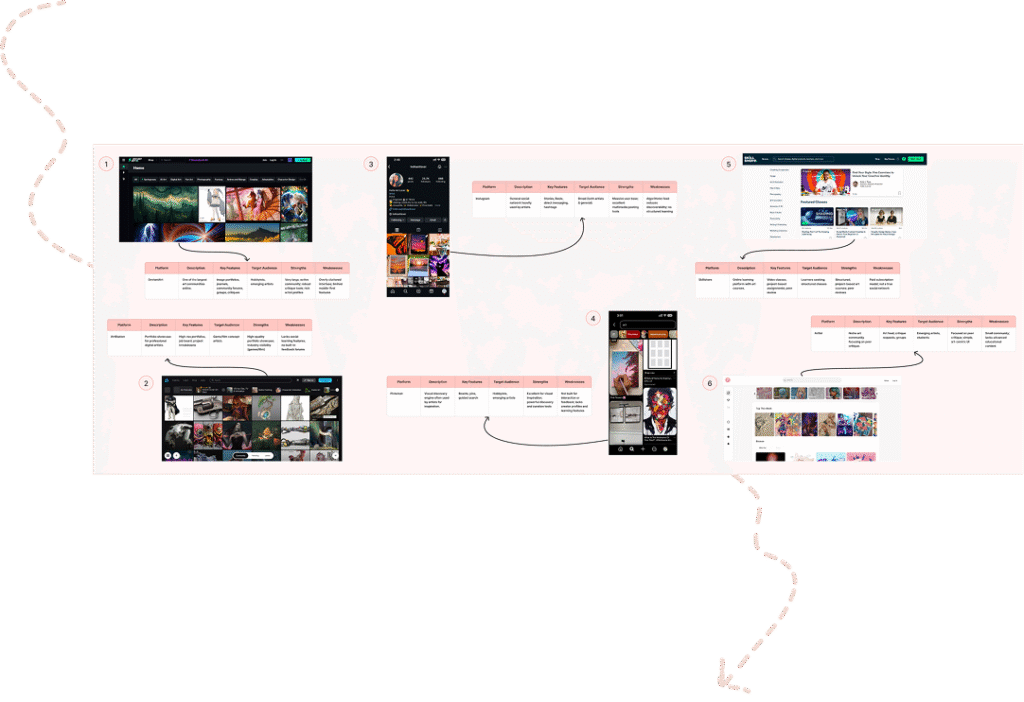
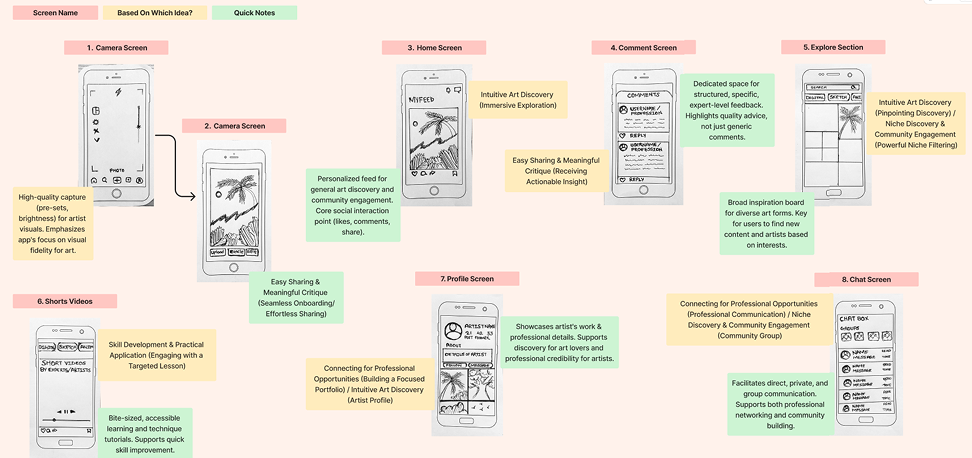
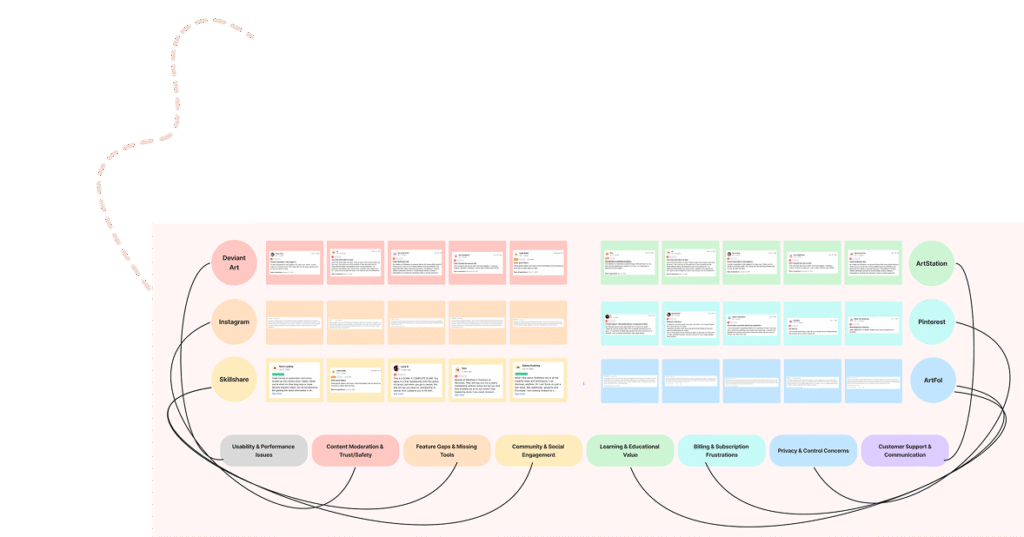
The project’s Research and Ideation phases were rapid and user-driven. We analyzed competitors and user reviews to precisely define user needs. Solutions were visualized through storyboarding and solution sketching (wireframing) to quickly map out critical journeys and features. This approach ensured that every design choice was grounded in empathy and directly addressed the problem of fragmented and diluted art engagement.
Competitor Analysis
Solution Sketching
User Reviews Analysis
Prototype and Validate
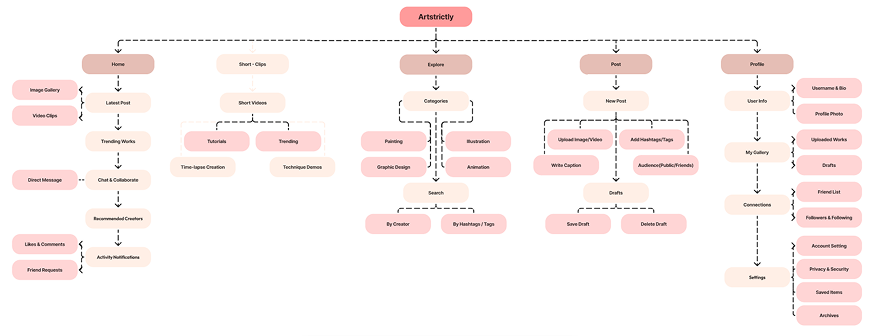
Information Architecture
(IA) is how I organized ArtStrictly's content and navigation. I mapped out the hierarchy of features (like the feed, profile, and search) to ensure users could find art and tools intuitively. This step prevented confusion and created a clear, logical structure for the entire platform.
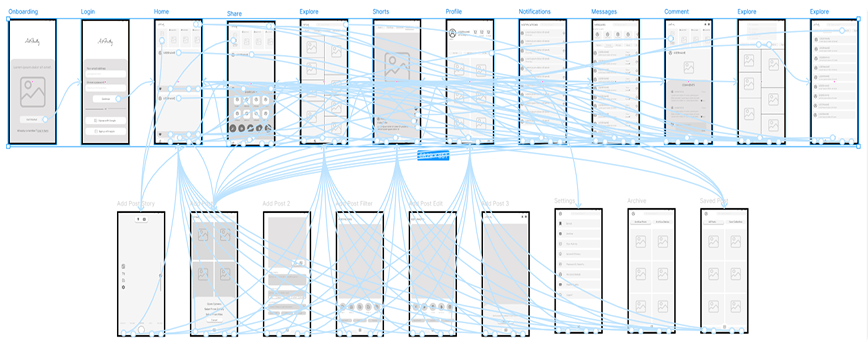
Wireframing
Wireframing quickly translated abstract ideas into the tangible structure of the ArtStrictly platform. We created low-fidelity visual guides for key screens, focusing solely on content hierarchy, placement of tools, and primary user flow. This rapid visual mapping allowed us to test the foundation of the interface early, ensuring every core feature was logically placed before investing time in visual design.
User Reviews Analysis
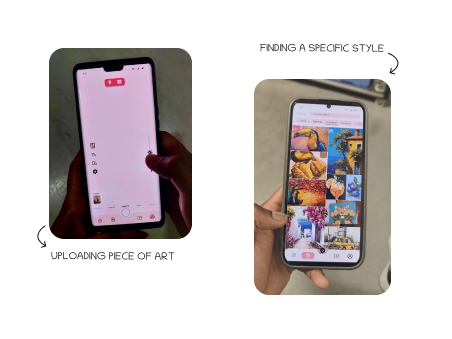
The User Testing phase was critical for validating our prototype. I conducted moderated sessions with target users (artists and enthusiasts), assigning them core tasks like "uploading a piece of art" or "finding a specific style using filters." I followed a think-aloud protocol to capture their immediate thoughts and frustrations. This process obtained clear, actionable feedback on usability bottlenecks, confusing navigation, and unexpected needs (e.g., more robust copyright assurance), allowing us to iterate and refine the design before final implementation.
03
BeforeBed
Project Overview
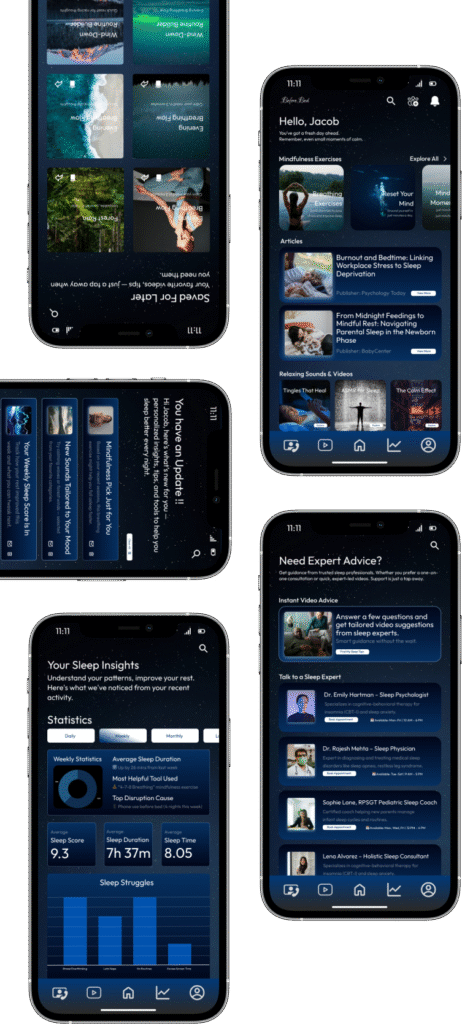
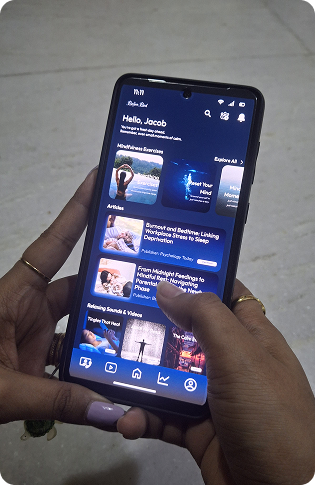
The Integrated Sleep Wellness System is a digital platform that promotes healthy sleep by combining sleep tracking, mindfulness training, educational content, and access to sleep health professionals. It provides a holistic approach to improving sleep quality, reducing stress, and supporting overall well-being.
Problem Definition
Many individuals experience poor sleep due to stress, lack of awareness, and inconsistent routines. Existing solutions focus on isolated aspects like tracking or meditation but fail to offer a complete, connected approach. This project aims to solve this by providing an integrated system that unites sleep monitoring, mindfulness, and professional guidance in one platform.
Proposed Solution
The project proposes a connected sleep wellness system that offers personalized insights, guided mindfulness sessions, and professional consultation in one platform. By merging technology and psychology, it empowers users to monitor, manage, and improve their sleep effectively.

Methodology
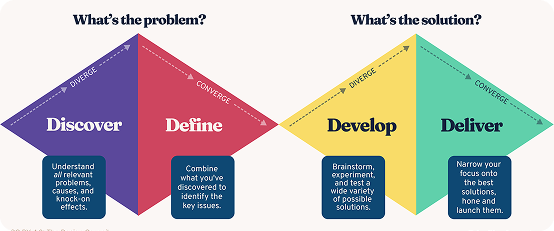
Double Diamond design process was chosen for its structured approach to research, ideation, prototyping, and evaluation, ensuring user-centered design decisions. The model helped identify real user needs, generate effective concepts, and refine the final solution through testing and feedback.
Scramper Method
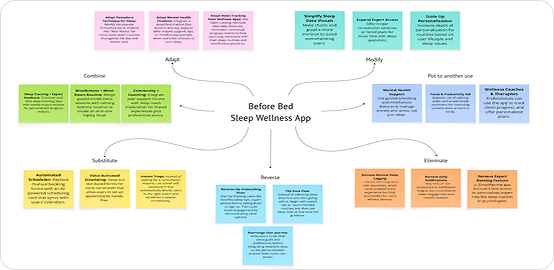
Double Diamond design process was chosen for its structured approach to research, ideation, prototyping, and evaluation, ensuring user-centered design decisions. The model helped identify real user needs, generate effective concepts, and refine the final solution through testing and feedback.
Crazy 8’s
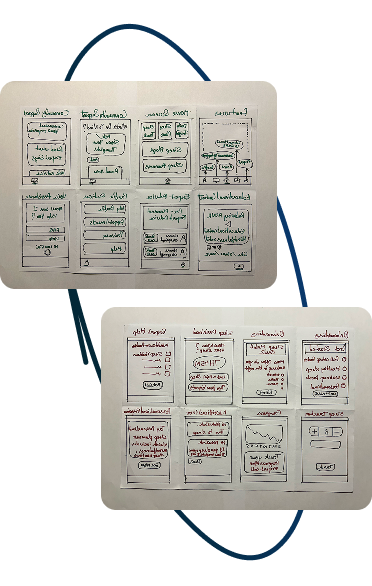
The Crazy 8 technique was used during the ideation phase to rapidly generate a variety of design ideas. In this method, eight different concepts are sketched within eight minutes, encouraging creativity and quick thinking. It helped explore multiple solutions for improving user experience before selecting the most effective design direction.
User Reviews Analysis
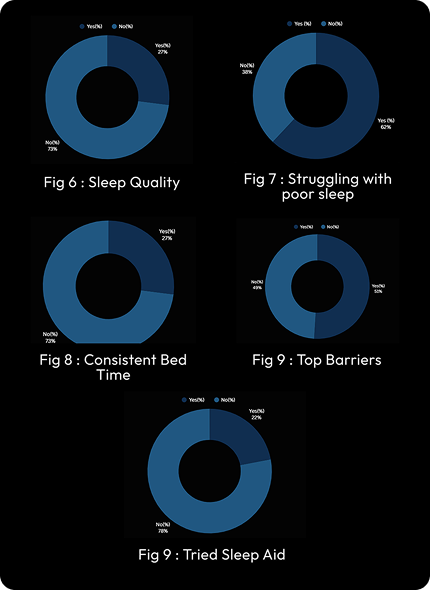
A pre-interview survey of 37 UK adults examined sleep behaviors, routines, and barriers. Results showed that 27% rated their sleep quality as poor, and 62% experienced poor sleep at least three nights per week. Only 27% had a consistent bedtime routine, while top barriers included racing thoughts (49%) and screen use (51%). Just 22% had tried sleep aids. These insights guided our design focus on integrated tracking, personalized bedtime routines, and easy access to expert support.
Prototyping Testing
We conducted remote moderated testing with eight users representing our three personas. Participants completed key tasks (e.g., setting a wind-down reminder, scheduling a sleep coach session) while sharing their thoughts aloud. We measured task success, time on task, and noted UI confusion points such as unclear icons. Post-session surveys captured overall usability feedback and user satisfaction.
Prototyping Testing
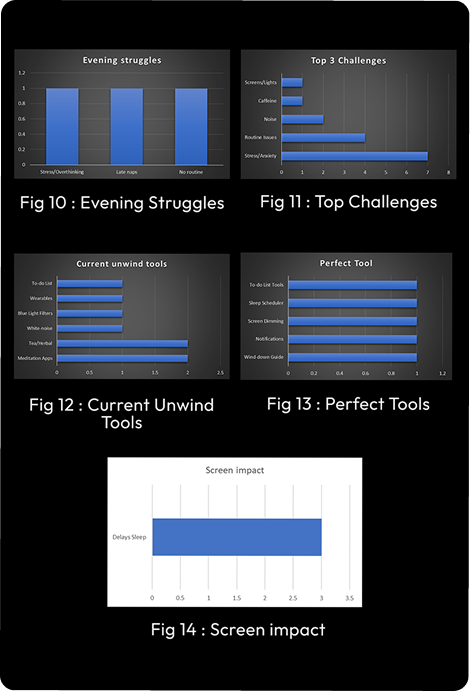
From nine user interviews, five key themes emerged. Most participants struggled to relax at night due to stress, racing thoughts, and irregular routines. The main challenges identified were stress and anxiety (9/9), inconsistent bedtimes (4), and noise disruptions (2). Common unwinding tools included meditation apps, herbal teas, and occasionally white-noise machines or blue-light filters. Screen use before bed delayed sleep for some, and users expressed interest in features like guided wind-down routines, smart scheduling, dimming screens, and to-do list integration.
04
uniconnect
Storyboards
Building on our personas, I developed storyboards to visualize real-life scenarios where users might interact with our app. These scenarios capture the daily challenges and frustrations faced by students and teachers.
Project Overview
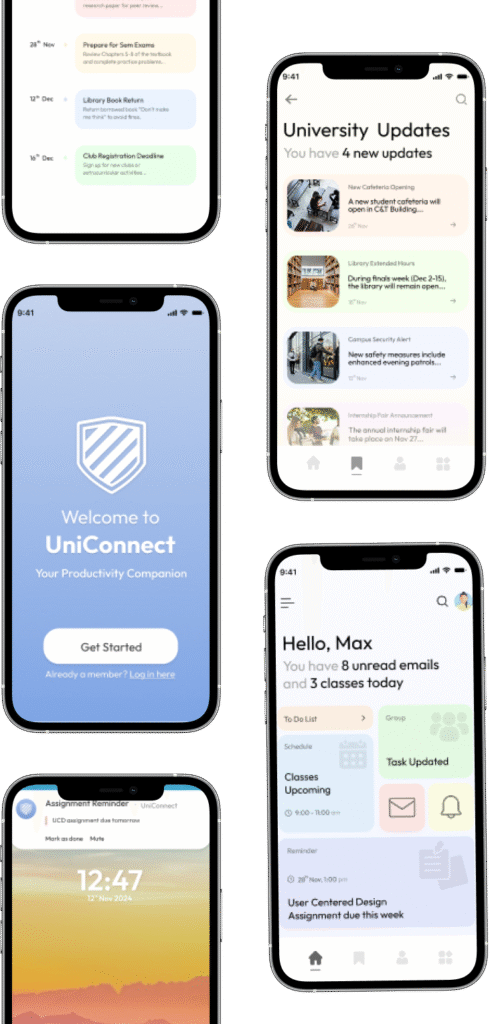
UniConnect is a productivity mobile app designed to bridge the gap between students and teachers, offering tools to streamline productivity, enhance collaboration, stay ahead of academic deadlines, and never miss important updates
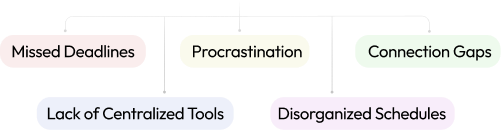
Problems Identified
Key Findings
Our research revealed that university students and teachers face a few productivity challenges. Existing tools are fragmented and a centralized, user-friendly solution is needed to streamline productivity and collaboration.
User centered design Approach
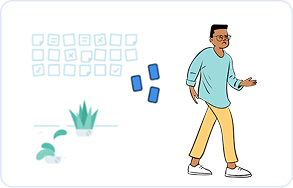
Amir misses a rescheduled class due to buried notification, leaving him frustrated.
Overwhelmed by juggling multiple apps, he struggles to keep track of schedules.
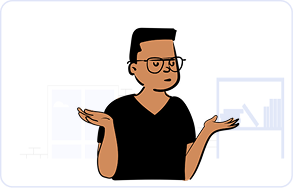
He wonders if he’s too old to keep up with evolving technology.
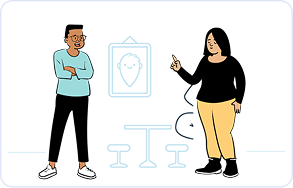
A colleague suggests UniConnect to simplify his scheduling.
Amir downloads the app and syncs his university timetable and tasks.
With UniConnect, Amir stays on top of his responsibilities and feels less stressed
Robbie struggles to balance teaching, planning, and admin tasks.
She forgets a key curriculum update due to scattered tools.
The missed deadline adds stress and frustration.
Robbie discovers UniConnect to simplify her workflow.
She integrates plans, deadlines, and communication into one app.
With everything organized, Robbie feels productive and stress-free.
Sara struggles to manage her tasks across multiple platforms.
She misses preparing handouts for an important lesson.
The oversight leaves Sara feeling anxious and frustrated.
Sara discovers UniConnect, an app for organizing tasks and schedules.
She integrates her lesson plans, reminders, and grading into the app.
With everything in one place, Sara feels more prepared and confident.
Branding
For our next step, we designed a logo that aligns with a modern and minimalist theme. We also chose a clear and accessible font to ensure readability.
We incorporated personas, wireframing, and prototyping as key guiding factors in this project.
- Personas helped us understand user behaviors and goals, ensuring our design addressed their needs.
- Wireframing allowed us to plan the app’s structure and navigation effectively.
- Prototyping enabled iterative testing to refine the user experience based on feedback.
We incorporated personas, wireframing, and prototyping as key guiding factors in this project.
- Personas helped us understand user behaviors and goals, ensuring our design addressed their needs.
- Wireframing allowed us to plan the app’s structure and navigation effectively.
- Prototyping enabled iterative testing to refine the user experience based on feedback.